A summit of symbolic weight
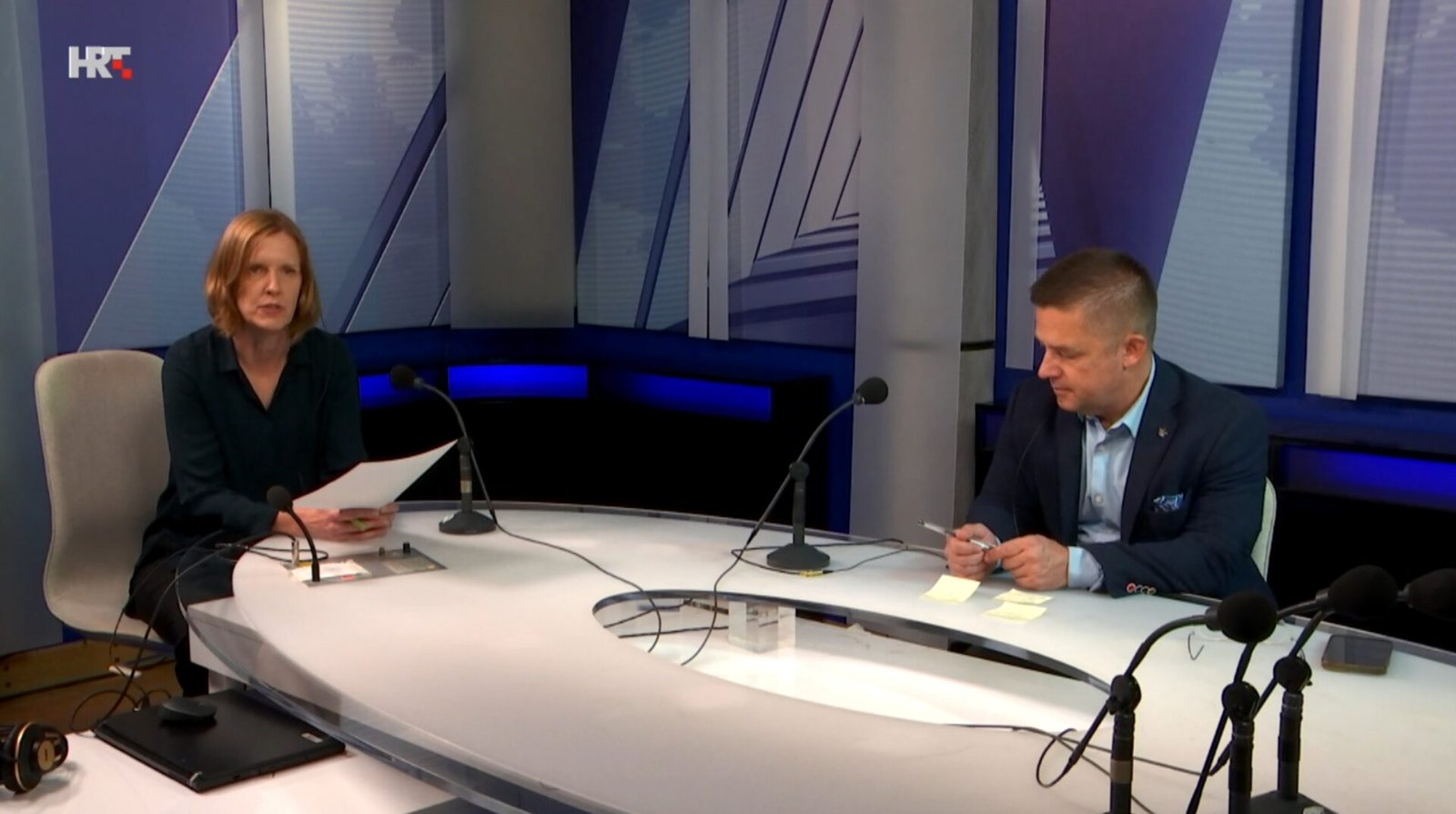
The discussion on Hrvatski radio’s “U mreži Prvog” followed the meeting of US President Donald Trump, Russian President Vladimir Putin and Chinese President Xi Jinping in Shenzhen.
Tvrtko Jakovina argued that the meeting is relevant because the three countries are, in military terms, unmatched in the world. He noted that Russia is economically far weaker than the United States and China, but said it has historically been the weaker economy among its great-power rivals. Its recognition at Yalta, he recalled, owed much to its enormous losses in the Second World War. In his view, summits of this kind carry symbolic value even when nothing changes politically straight away, and this one will be referenced and compared with past summits. He also said Trump’s behaviour toward Putin in China went beyond ordinary friendliness, and that this was not the first time.
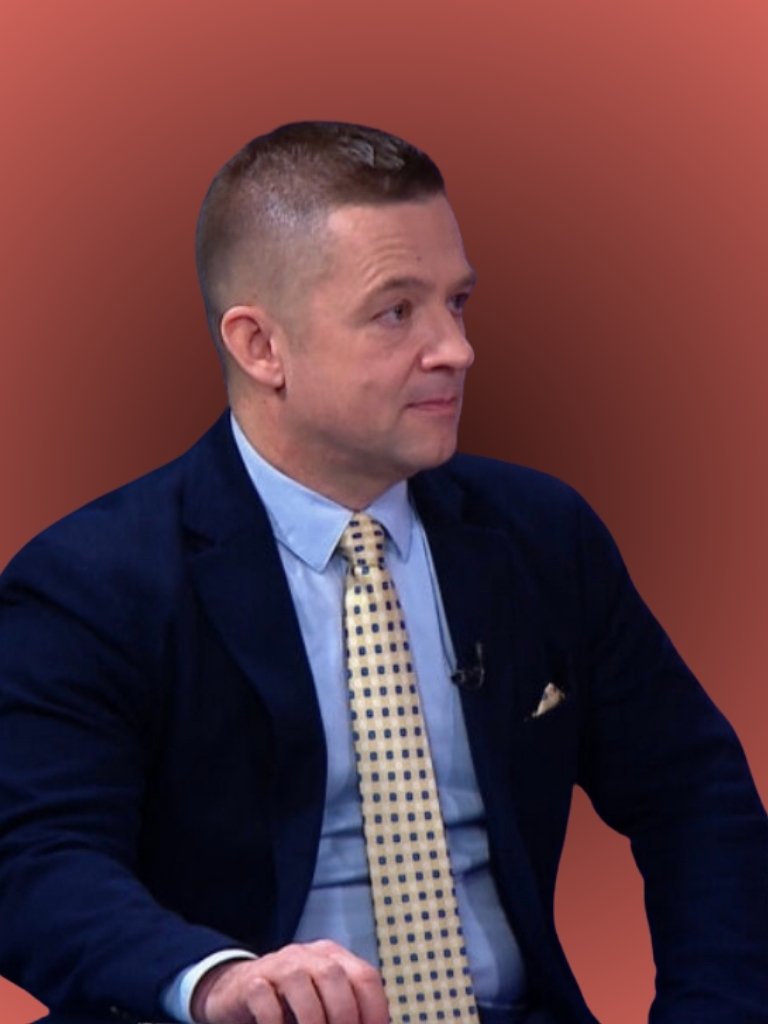
Robert Barić was more sceptical. He said the meeting will be remembered only as the first gathering of the three countries. He compared it unfavourably with the 2010 Obama-Medvedev meeting, which had been long prepared and was part of the New START process. The joint statement, he noted, had only four elements and offered no concrete solutions to major international problems. Over roughly 80 minutes of talks, key issues such as AI regulation, China-US economic relations and climate change were not opened. Chinese representatives, he said, sought to appear measured and responsible.
Comparisons with Yalta make no sense to me. For now China cannot replace the US, regardless of what Trump does. The declining power at Yalta was Great Britain, and now it is Russia. For Putin, the meeting served as nice PR.
ROBERT BARIĆ
Order, dependence and the question of Europe
Barić argued that a new international order is not created by a single summit but by a long process that began well before Shenzhen and will last years or decades. He described the liberal order as returning to a regional level, as during the Cold War, with the US role uncertain under the Trump administration. On economics, he said everyone is trying to reduce mutual dependence without fully decoupling, an approach he called de-risking.
Both speakers turned to Europe’s position. Europe responded to the summit by gathering leaders in Berlin to discuss continued aid to Ukraine. Jakovina said the European answer was unambiguous, but that it remains unclear where the European Union stands and who “Europe” will be in future negotiations. He said the United Kingdom has played an important role and can act more independently on some issues because it is outside the EU. European states share similar positions on Ukraine but not on all other international questions, which leaves open who would represent European interests in talks with the US and Russia.
The European response was unambiguous when it comes to Ukraine and continued aid on the principle of ‘as long as it takes’. But the better question is where the European Union is in all this. Europe will have to be negotiated with over territory, but the question is who that Europe is.
TVRTKO JAKOVINA
Barić added that any peace deal reached without Ukraine and European states would raise serious questions about implementation. Europe is divided over Russia, he said, and will be forced to restructure its foreign-policy decision-making. He referred to statements by German Chancellor Friedrich Merz about changing European mechanisms so that individual states cannot block aid to Ukraine.
Moscow’s calculations and the outlook for the war
Barić argued that Putin has always counted on Trump pressing European allies to accept a deal on Russian terms. In his interpretation, Moscow is offering the withdrawal of a few Oreshnik missiles, whose operational status he questions. He described them as prototypes from around 2016 or 2017, hastily deployed to Belarus. In return, he said, Russia is demanding Finland’s exit from NATO, the abandonment of bases in the Baltic, and Moldova’s conversion into a federation of two republics with the Russian army returning in full force. It also wants no French or British nuclear guarantees for the rest of the continent. This list is Barić’s reading of Russian aims rather than a published Russian position.
He also pointed to growing Russian losses. In his assessment, the threshold of 50,000 dead and wounded per month appears to have been crossed in October, which raises the question of whether Russia can replenish its manpower. By his own data, 1.1 million people fled Russia in September and October for fear of a new mobilisation, and Putin could be forced into one in mid-2027. These figures are his own and were not independently sourced in the discussion. He said Moscow is trying to prolong negotiations because an immediate halt to the fighting would not let it achieve all its political and security goals.
His conclusion was: Putin has not given up on anything, there is no chance of peace and the war continues. The conflict will probably be frozen in 2027, though he presented this as a forecast rather than a certainty.
This article is an analytical synthesis based on remarks made by Tvrtko Jakovina and Robert Barić in their appearance as guests on Hrvatski radio’s programme U mreži Prvog. It does not constitute a verbatim transcript but a policy-oriented summary and interpretation of their analysis.