The summit and the Yalta analogy
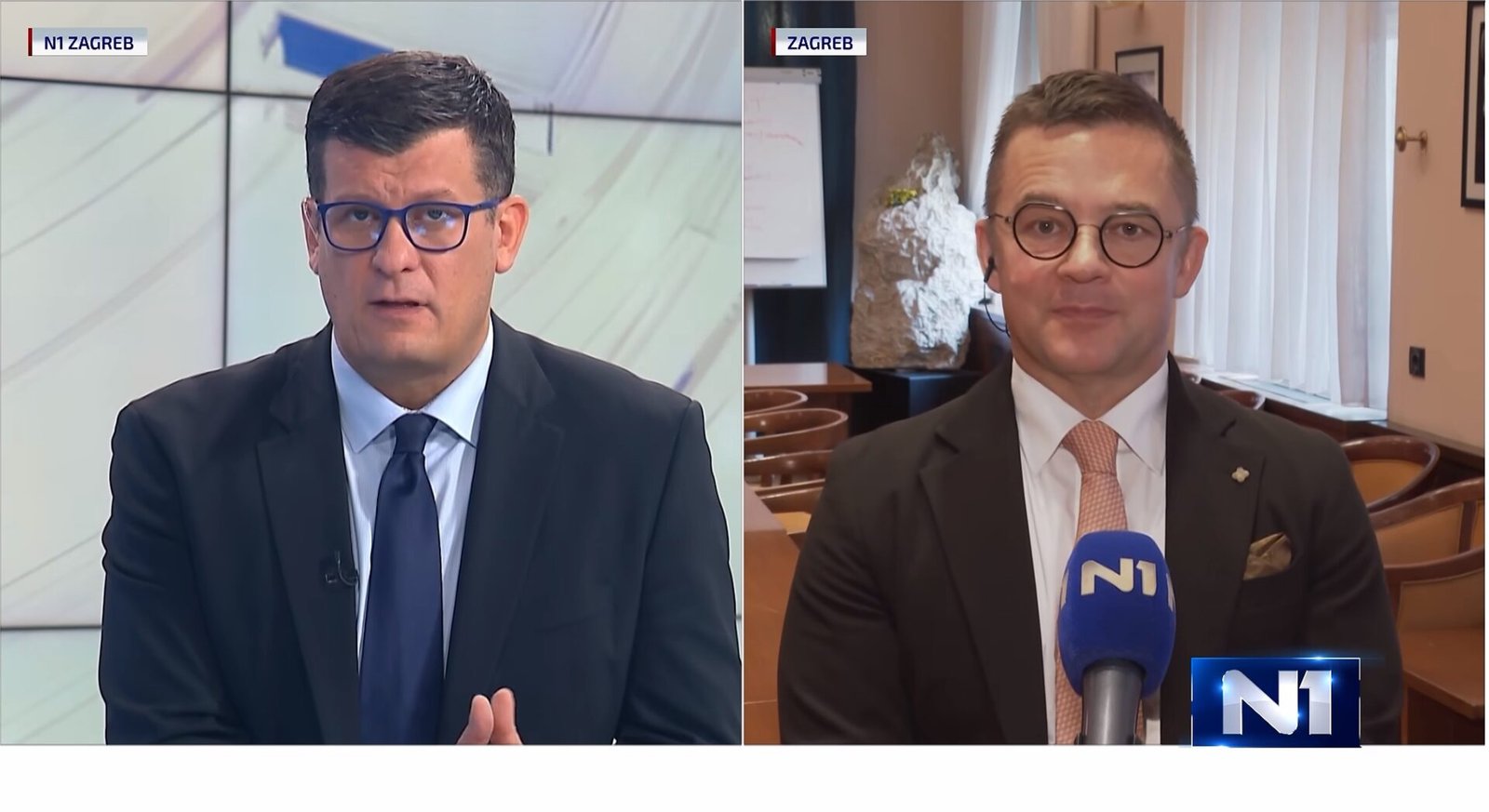
Speaking on N1 television’s “Studio uživo” with host Hrvoje Krešić, historian Tvrtko Jakovina addressed the announced meeting of the American, Chinese and Russian presidents, which media and commentators have already compared to the 1945 Yalta conference. Jakovina’s starting point was that it is logical for leaders to meet directly in such a format. In his view, even without the weight carried by the presidents of Russia, the United States and China, a meeting in the right format can be of interest.
He was more sceptical about the historical parallel. Yalta, he noted, has carried a lasting association with the division of the world into blocs and with lines drawn arbitrarily across Europe. Yet in his reading it was far more a wartime than a postwar conference, held in February 1945 under the impression of the initially successful German offensive in the Ardennes. He recalled that the ailing American president effectively travelled to Stalin’s ground, and that it took courage for Churchill and Roosevelt to make the journey.
I would add that if we are looking for the moment when the victors of the war began to delineate their spheres in more detail, that would be Potsdam, after the end of the Second World War, and less Yalta, which was held in February 1945.
TVRTKO JAKOVINA
Who gains, and who is absent
Jakovina’s analysis of the present-day summit centres on the differing interests of the participants. China, he suggested, was the party least interested in such an encounter, while Russia was the most. For Moscow, the meeting delivers what it has wanted most since the collapse of the Soviet Union: to be treated as a superpower. He described the lack of such recognition as a deep frustration, not only for Putin but particularly for him.
On the American side, Jakovina argued that the US president represents a traditional imperial view of the world, one that sits deeply at odds with the character of the United States itself. He said Trump has advocated this nineteenth-century outlook more than anyone.
As for Europe, Jakovina contended that its significance has faded, and that in this sense there is neither a European Union nor European powers any longer. Against that background, he said, the absence of anyone from Europe at the table is perhaps not surprising, since the position of Europe and its states on the international stage has changed.
Remembering Miko Tripalo
The interview also touched on the 100th anniversary of the birth of Miko Tripalo. Jakovina referred to the promotion at the Croatian Journalists’ Association (HND) of the book “Tripalo”, which in part promotes the work of the Miko Tripalo Centre for Democracy and Law. According to him, the book and the Centre deal with building the rule of law, the struggle for democracy, youth issues, corruption and the judiciary.
One of the important segments of the Centre is care for what Miko Tripalo was. Today we were reminded of what Tripalo meant for the second half of the twentieth century, and of the vision of Croatia held by someone who, coming from an ultra-wealthy patrician family, after stealing a pistol from an Italian officer went off to join the Partisans.
TVRTKO JAKOVINA
This article is an analytical synthesis based on remarks made by Tvrtko Jakovina in his appearance as a guest on Jutarnji list’s report of N1 television’s Studio uživo. It does not constitute a verbatim transcript but a policy-oriented summary and interpretation of his analysis.