A Campaign Built Around One Name, From Both Sides
Jović argued that the Student List’s apparent lack of a common platform is misleading. On every other question, he said, the list’s members diverge — but on the single issue that currently defines Serbian politics, Vučić’s departure, they are entirely aligned, and protest chants calling for his exit have become the movement’s unofficial anthem.
He suggested the governing side has, in practice, mirrored this same logic. Campaign branding has increasingly centred on Vučić personally rather than on his party’s formal name, a shift Jović linked to Vučić’s 2022 presidential vote outperforming his coalition’s 2023 parliamentary result by roughly 450,000 votes.
Governing Is a Different Question From Winning
Asked whether such a heterogeneous coalition could realistically govern, Jović was cautious. He noted that the list’s primary goal may not be to govern in a conventional sense at all, but to remove the current government and open space for a new democratic process — with various, still-unsettled ideas about what form that process should take.
He also pointed out that parliamentary seats and governing power are not the same thing: a government can draw on figures well beyond those currently on the ballot. On the question of whether the movement is too fractured to produce a workable government, Jović pointed to months of sustained, disciplined coordination — visible in the near-total absence of leaks from the movement’s internal assemblies — as evidence of a cohesion that its public diversity does not suggest. He also noted the movement’s restraint from violence, a contrast he drew with recent unrest elsewhere in Europe.
A Movement That Grew Around the Absence of Media Access
Jović argued that the scale and organization of the protest movement raises real questions about how essential television and radio presence still is to political mobilization in Serbia. In his view, the movement achieved its current position largely without access to major broadcast platforms — and that very exclusion became part of what pushed it to build alternative platforms and take its campaign into the streets instead.
Two Decades of Misjudged EU Policy
It is heterogeneous on every issue except the most important one — that Vučić must go.
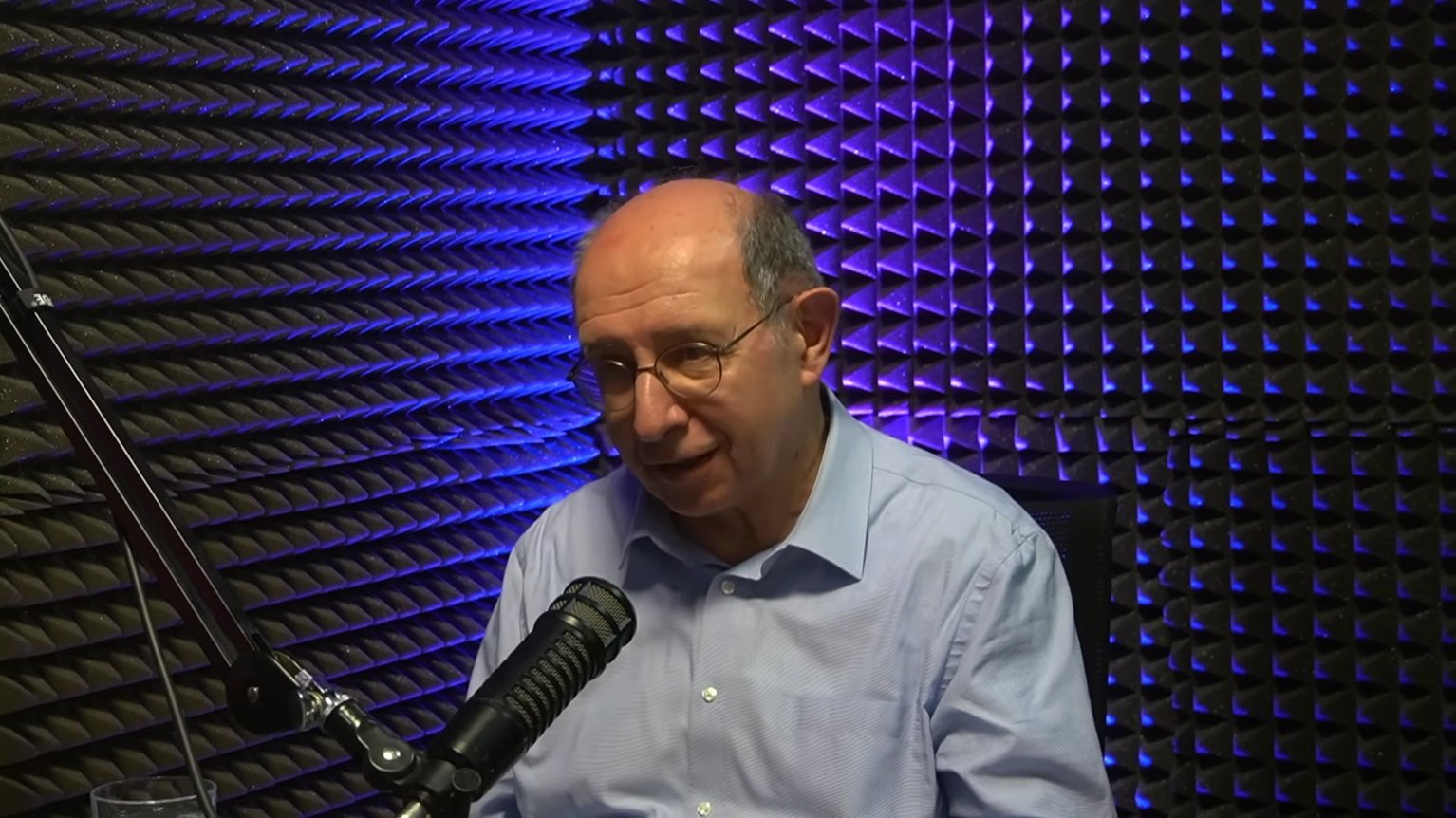
DEJAN JOVIĆ, FOREIGN POLICY FORUM PRESIDENT OF THE BOARD
On the European Union’s broader record in the region, Jović argued that Brussels has misjudged Serbia policy since around the early 2000s — earlier, he noted, than the Merkel-era starting point suggested by a fellow panelist on the programme. In his account, the EU has repeatedly had pro-European leadership available in Serbia without ever offering a credible membership path in return, and failed to adequately support those who extradited figures such as Ratko Mladić and Slobodan Milošević or pursued reconciliation with neighbouring states.
He was equally cautious about what follows a potential Student List victory, suggesting the EU would be unlikely to accelerate Serbia’s accession immediately even in that scenario — and noting that Serbia’s policy of military neutrality predates Vučić and may not shift regardless of who wins.
Self-Determination as the Final Word
Jović closed by arguing that it is not the place of outside observers to prescribe what policy a democratically elected Serbian government should pursue — framing the election as, above all, a matter of the Serbian public’s own right to self-determination.
This article is an analytical synthesis based on comments made by Dejan Jović during his appearance on Hrvatski radio’s “Poligraf – politički grafikon,” as summarized in his own subsequent public post. It does not constitute a verbatim transcript but a policy-oriented summary and interpretation of his remarks.