Introduction
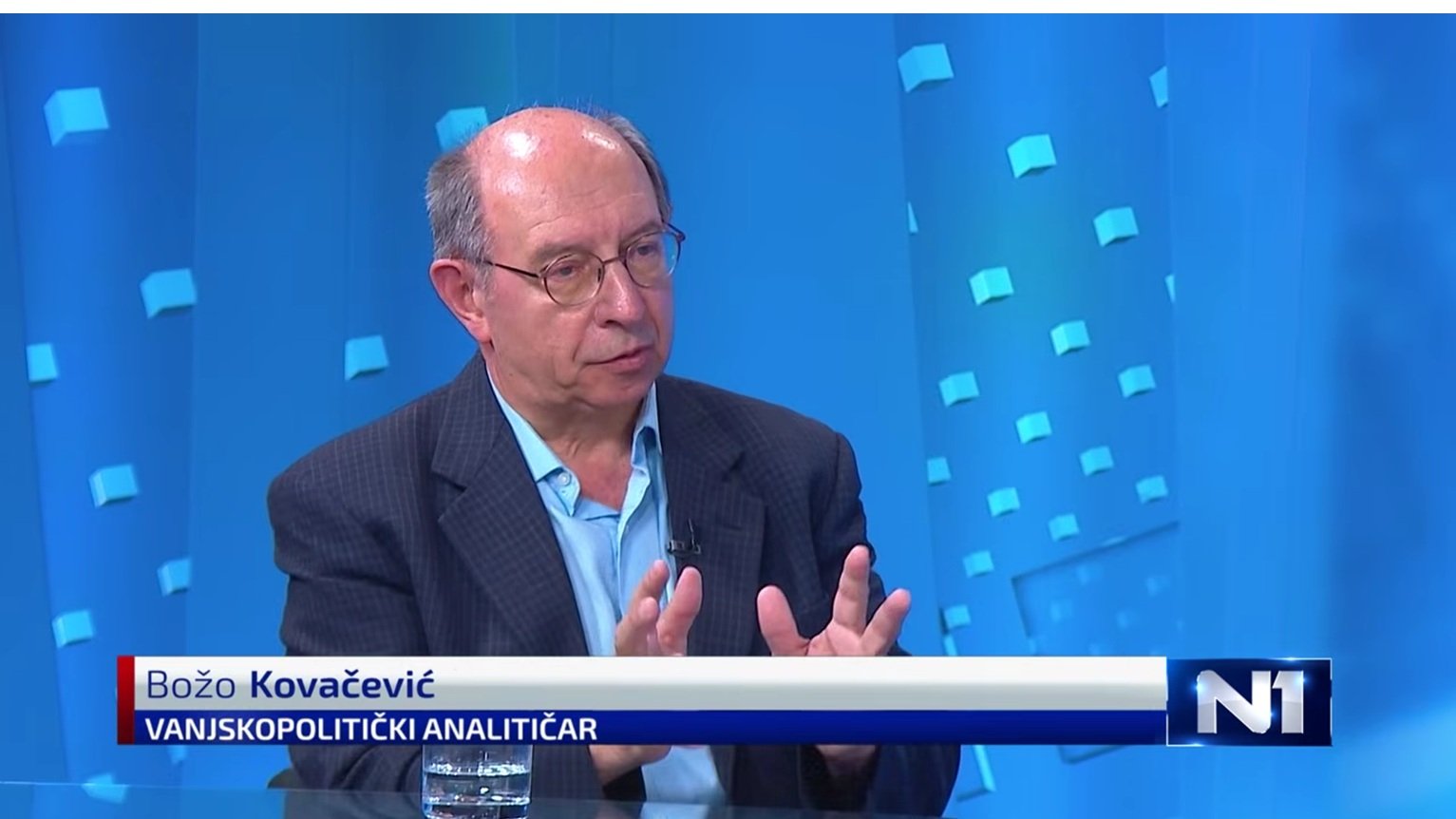
Commenting on the recent visit of several European leaders—including Croatian Prime Minister Andrej Plenković—to Kyiv, as well as the gathering of the informal Coalition of the Willing during France’s Bastille Day celebrations in Paris, Kovačević placed newly announced defence cooperation initiatives within the context of the European Union’s €90 billion financial package for Ukraine.
He argued that while joint production will strengthen Ukraine’s military capabilities, a significant share of European financial support will ultimately benefit Western defence industries. He also pointed to the agreement between European Commission President Ursula von der Leyen and UK Prime Minister Keir Starmer to allow British defence manufacturers to participate in procurement financed through the EU-backed package, despite the United Kingdom not contributing guarantees for the underlying loan.
1. The Coalition of the Willing and Informal European Leadership
Kovačević argued that these developments illustrate the growing political significance of the Coalition of the Willing, which he described as an informal grouping through which France, Germany, and the United Kingdom seek to shape European security policy outside the EU’s established institutional decision-making framework. In his view, concerns over European security have provided political justification for increasingly relying on ad hoc arrangements that, he argues, place both the European Union and NATO in the backseat. Kovačević argues that the coalition increasingly operates outside traditional EU institutional procedures, allowing its leading members, former imperial powers, to shape European policy more rapidly than would be possible through unanimous EU decision-making.
Offering a broader geopolitical interpretation, Kovačević argued that the Coalition of the Willing emerged partly in response to proposals for negotiating an end to the war advanced by the Trump administration. He contended that the coalition seeks to maintain military pressure on Russia while simultaneously reinforcing the strategic influence of Europe’s leading powers . In his assessment, this approach reflects not only resistance to Russian revisionism but also an effort by major European states to shape the future European security architecture according to their own strategic interests – based on imperial dreams.
2. Changes in US positioning towards Ukraine
The interview also addressed the evolution of US policy towards Ukraine. Kovačević suggested that President Donald Trump’s rhetoric has shifted considerably, noting that Trump now links continued American engagement to US economic interests arising from agreements concerning Ukraine’s critical mineral resources. Kovačević described this as a significant departure from Trump’s earlier assertions that the war did not constitute an American conflict.
3. Negotiation Versus Military Pressure
While expressing support for elements of the coalition’s joint declaration – including continued backing for Ukraine’s sovereignty and territorial integrity, and the principle that decisions concerning Ukraine should not be taken without Ukraine or the European Union – Kovačević argued that the declaration lacks a clearly defined diplomatic strategy towards Russia. He maintained that negotiations with Moscow remain indispensable for any durable settlement and suggested that an exclusive emphasis on military support risks prolonging the conflict rather than creating conditions for peace.
Kovačević further argued that the current strategy represents continuity with the policy adopted during the early stages of the war, when, in his interpretation, Western governments discouraged negotiations with President Vladimir Putin. “If negotiations remain excluded,” he argued, “the only remaining outcome is the continuation of war.”
4. Domestic Pressures Inside Ukraine
Turning to developments inside Ukraine, Kovačević acknowledged the considerable effectiveness of Ukraine’s expanding long-range strike capabilities, arguing that attacks deep inside Russian territory have altered public perceptions within Russia by demonstrating that the war directly affects ordinary citizens. At the same time, he noted that Ukraine continues to face significant domestic challenges, including mobilisation, governance, and corruption, observing that President Volodymyr Zelensky’s original electoral promises of peace and anti-corruption reforms have become increasingly difficult to reconcile with the prolonged demands of wartime governance.
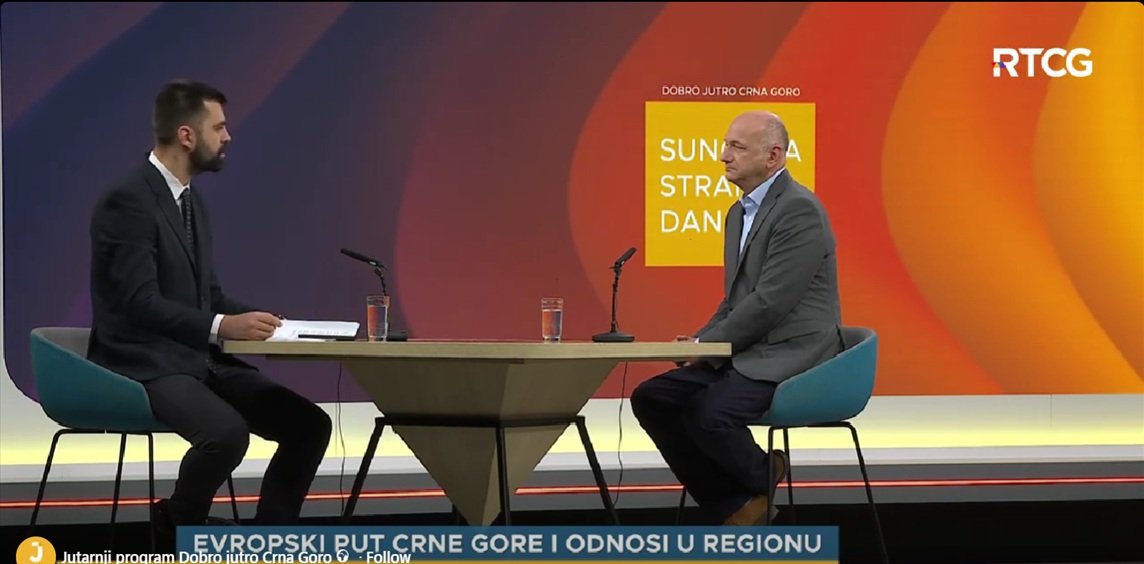
This article is an analytical synthesis based on an interview originally published by N1 Hrvatska. It does not constitute a verbatim translation but a policy-oriented summary and interpretation of the interview.