Elections as resistance and the role of intellectuals
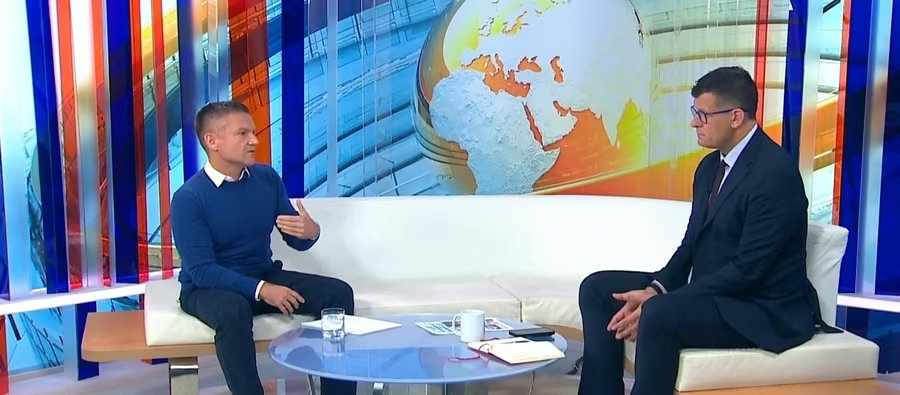
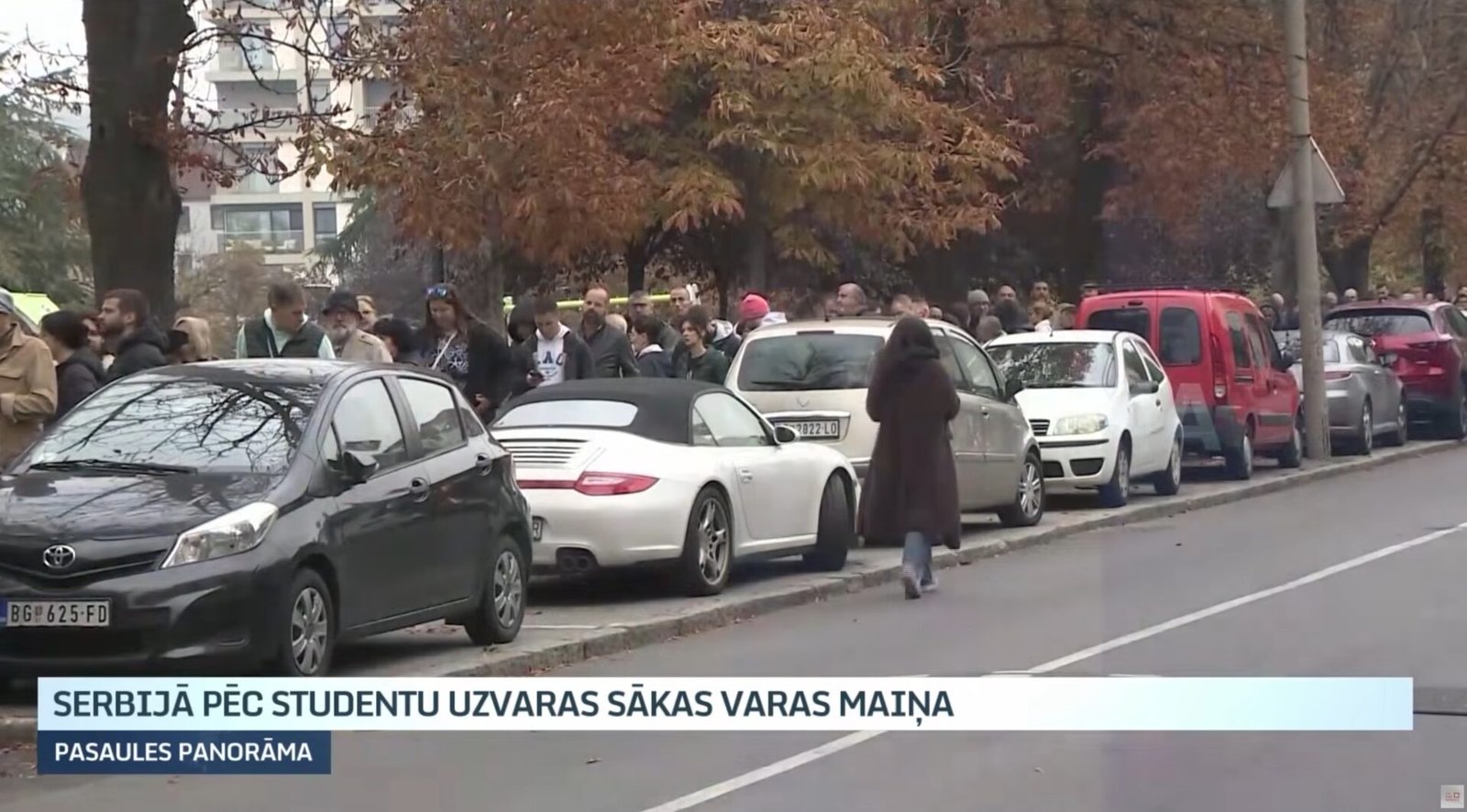
Speaking to RTS in an interview conducted by Tihana Bajić after Serbia’s parliamentary elections, Dejan Jović said the outcome showed resistance by students, professors and intellectuals to the pressures they had faced, and that they had connected with broader parts of society. He said the party in power until the elections announced measures against universities during the campaign, which it regarded as its main opponents.
It seems to me that what happened is actually a kind of resistance to those pressures. That is, a kind of resistance in the broader sense by intellectuals, young people, students, but also professors, who are often somewhat forgotten in that wider story.DEJAN JOVIĆ, FOREIGN POLICY FORUM PRESIDENT OF THE BOARD
In his view, the results showed intellectuals and a large number of citizens on the same side, against the idea that professors and students are an alienated elite. He argued that intellectuals who want to change society must be ready to leave the closed, safe space of academia and care about the public good, and that defending rationality, enlightenment and free discussion remains important.
Jović noted that intellectuals who enter politics become partly amateurs in the political sphere, unless they are political scientists, or economists or lawyers in the economic sphere of government, and often need time to adapt. He rejected the idea that this should breed distrust of educated people.
“But then the question arises: if we do not trust them, people who are highly educated, how can we trust ordinary citizens when they enter the sphere of government? Then we would be against democracy as such.”, said Jović.
He recalled the changes of 2000, when Dragoljub Mićunović, Vojislav Koštunica and Zoran Đinđić took major state functions and faced strong resistance from the traditional deep state, the security services and the old regime, which they only partly overcame. Jović said the leaders of 2000 did their best and sincerely wanted to carry out the majority’s will, but faced obstacles from outside.
The EU’s approach to Serbia
Jović said the EU should not repeat the pressure it put on Đinđić over the extradition of Milošević, or on Boris Tadić over Kosovo and other issues. He said a future government would have an easier task if it could implement the voters’ will without external pressure and with visible foreign-policy progress.
“I think it is important, for example, that the European Union does not exert the kind of pressure it exerted on Zoran Đinđić over the extradition of Milošević, and later on Boris Tadić over other matters such as Kosovo, and at the same time that it prepares to make a much better offer if Serbia wants to join the European Union, so that the European Union does not remain only at the level of some phrases.”, said Jović.
Serbia’s image and relations with Croatia
Jović described the change of government in Belgrade as a chance for a new start with Croatia, arguing that it had been very hard in Croatia to present Tomislav Nikolić or Aleksandar Vučić as partners and friends.
“I think this is a chance for a new start, because it was genuinely very hard in Croatia to present Tomislav Nikolić or Aleksandar Vučić as partners and friends. People such as Vojislav Koštunica and Boris Tadić, for example, did not have that problem, so cooperation could be more direct and more positive.”, said Jović.
He said he would not be automatically too optimistic, because Croatia, Slovenia and Bulgaria have already imposed or announced conditions for Serbia’s EU accession; the details of these conditions were not specified in the interview. He pointed to a certain caution in these countries, including Croatia.
“There is a kind of caution in these countries, in Croatia too, because many found it convenient to have some bogeyman in Belgrade.”, said Jović.
Jović said Serbia is changing its image globally and in Europe, and that if this continues its global position will be stronger. Those who hoped to redirect its foreign policy through pressure, veto threats or nationalist conditions may, in his view, be disappointed and meet greater resistance within the EU.
Serbia is changing its image of itself, globally and within European frameworks. It is now seen above all as a kind of centre of resistance to authoritarianism, as a country that has twice in 26 years managed to bring about a democratic turnaround.
DEJAN JOVIĆ, FOREIGN POLICY FORUM PRESIDENT OF THE BOARD
On Croatia, Jović said he always expects Croatian officials to correct nationalist rhetoric towards Serbia, but that this rarely happens. He cited Croatia’s approach to Montenegro’s EU accession as an example, which he described as often making unrealistic demands that no one else in the EU supports.
“I see how, for example, Croatia approaches the European Union’s enlargement to Montenegro. That is, it often takes a very hard line and puts forward demands that are not realistic and that no one else in the European Union supports. I think Croatia is using the enlargement of the European Union to achieve some of its own individual political goals.”, said Jović.
Asked whether Croatia might become less nationalist, Jović was doubtful.
Will Croatia become less nationalist? I am not sure that will be the case. I think the rhetoric will continue, but it will be much harder for it to justify it if on the other side there is no one who is comfortable with the same thing and who will continue such a policy, and I hope there will not be.
DEJAN JOVIĆ, FOREIGN POLICY FORUM PRESIDENT OF THE BOARD
This article is an analytical synthesis based on remarks made by Dejan Jović in his appearance as a guest on RTS. It does not constitute a verbatim transcript but a policy-oriented summary and interpretation of his analysis.