The Western Balkans is Already Economically and Strategically Integrated into the West
The Western Balkans is today almost fully integrated into Western economic and security structures. This process accelerated significantly following Montenegro’s accession to NATO in 2017 and North Macedonia’s membership in 2020. As a result, the scope for Russian, Chinese, or any other external geopolitical influence in the region has been substantially reduced.
Predictions that Montenegro’s change of government would trigger a strategic realignment—towards Russia, renewed political integration with Serbia, withdrawal from NATO, or the revocation of Kosovo’s recognition—have proven entirely unfounded. None of these scenarios materialised. On the contrary, Montenegro has maintained its Euro-Atlantic course. Those who confidently forecast such a geopolitical reversal should reassess the credibility of their foreign policy analysis.
Russia Has Become a Weak and Disruptive Power in Europe
Montenegro is now widely regarded as the most likely candidate to join the European Union before the end of the current European Commission’s mandate in 2029, further consolidating Western influence in the region.
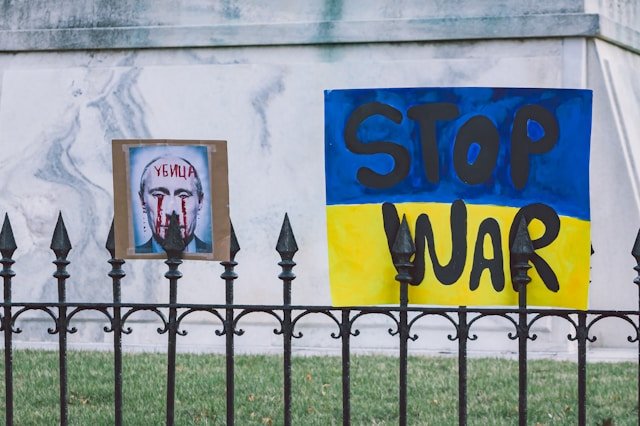
Russian influence has weakened across Europe, including in the Western Balkans, particularly since the full-scale invasion of Ukraine in 2022. Sweden’s and Finland’s accession to NATO in 2024—despite initial attempts by Croatian President Zoran Milanović to delay the process over issues related to Bosnia and Herzegovina—illustrates how the war has reinforced rather than weakened the Western security architecture.
Since 2022, maintaining a pro-Russian foreign policy position has become politically difficult—indeed, largely impossible—within Europe. At the same time, Russia’s strategic priorities lie elsewhere, and it lacks the geographic access necessary to project power into the Western Balkans, a region entirely surrounded by NATO member states.
Russia should therefore be understood not as a dominant regional actor but as a “weak power” and a “spoiler power.” While it retains the capacity to complicate or delay certain Western initiatives, it no longer possesses the ability to establish political dominance or reshape the European security order.
Serbia and Republika Srpska Remain the Last Outstanding Questions of Western Integration
Among the Western Balkan countries, only Bosnia and Herzegovina, Serbia, and partially recognised Kosovo remain outside NATO.
In practical terms, however, Bosnia and Herzegovina and Kosovo already fall within the Alliance’s security umbrella. NATO maintains a military presence in both territories, while the constitutional frameworks of both states were designed under substantial Western leadership and continue to operate under significant international supervision.
This leaves Serbia as the region’s only state genuinely outside the Western security infrastructure. Within Bosnia and Herzegovina, Republika Srpska remains a separate challenge, pursuing policies that are often more openly pro-Russian than those of Belgrade itself.
Seeking to preserve its policy of military neutrality, Serbia has increasingly strengthened its strategic partnership with China. Beijing has supplied Belgrade with advanced military capabilities, including supersonic ballistic missile systems unavailable elsewhere in Europe.
For this reason, the European Union’s strategic attention is increasingly focused on Serbia. It remains the only country in the Western Balkans that is neither a NATO member nor hosts NATO forces on its territory, placing it outside the broader Western political and security architecture.
Croatia Between Membership Conditionality and Europe’s Strategic Future
Croatia finds itself in an increasingly delicate strategic position. While Zagreb publicly supports further EU enlargement, it does not favour rapid accession unless candidate countries first satisfy Croatia’s bilateral political conditions. As the current enlargement process represents the first serious round of EU expansion since Croatia joined the Union, Zagreb increasingly sees an opportunity to exercise its influence through accession conditionality.
Croatia’s approach draws on precedents established within the Union, including Greece’s long-standing blockade of North Macedonia, Slovenia’s temporary obstruction of Croatia’s own accession process, and Bulgaria’s ongoing conditions imposed on North Macedonia.
In its policies towards both Bosnia and Herzegovina and Montenegro, Croatia has increasingly pursued what may be described as an ethnopolitical approach. This has been reflected, for example, in resolutions adopted by the Croatian Parliament concerning Bosnia and Herzegovina that seek to influence another sovereign state’s electoral legislation. Towards Montenegro, Croatian policy combines ethnopolitical concerns with unresolved issues stemming from the wars of the 1990s, which continue to occupy an important place in Croatia’s domestic politics and national identity.
Such an approach carries significant risks for the enlargement process. Should Croatia decide to exercise its veto powers—for example, during Montenegro’s accession negotiations—it could delay or even temporarily halt further EU enlargement.
The broader question, however, is whether such a strategy ultimately serves Croatia’s own national interests or risks producing the opposite effect.
Several influential EU member states—notably Germany—have made Western Balkan enlargement a strategic priority and are expected to exert increasing diplomatic pressure on Croatia not to obstruct the process, particularly on grounds perceived as rooted in ethnonational considerations.
The principal risk for Croatia is diplomatic isolation. It may increasingly be viewed as a case study of nationalist foreign policy towards neighbouring states—one that places greater emphasis on unresolved disputes from the wars of the 1990s than on the future cohesion, security, and geopolitical resilience of the European Union.
Croatia’s Leverage Varies Across the Region
To date, Croatia has achieved its greatest influence in relation to Serbia. Most recently, eight EU member states—including Croatia—supported postponing the opening of a new negotiation cluster in Serbia’s EU accession process.
Its leverage has been more limited with Montenegro and weakest in relation to Bosnia and Herzegovina, where Croatia has thus far been largely unsuccessful in persuading other EU member states to adopt its preferred policy positions.
Dejan Jović