Montenegro’s Accession Matters Beyond Montenegro
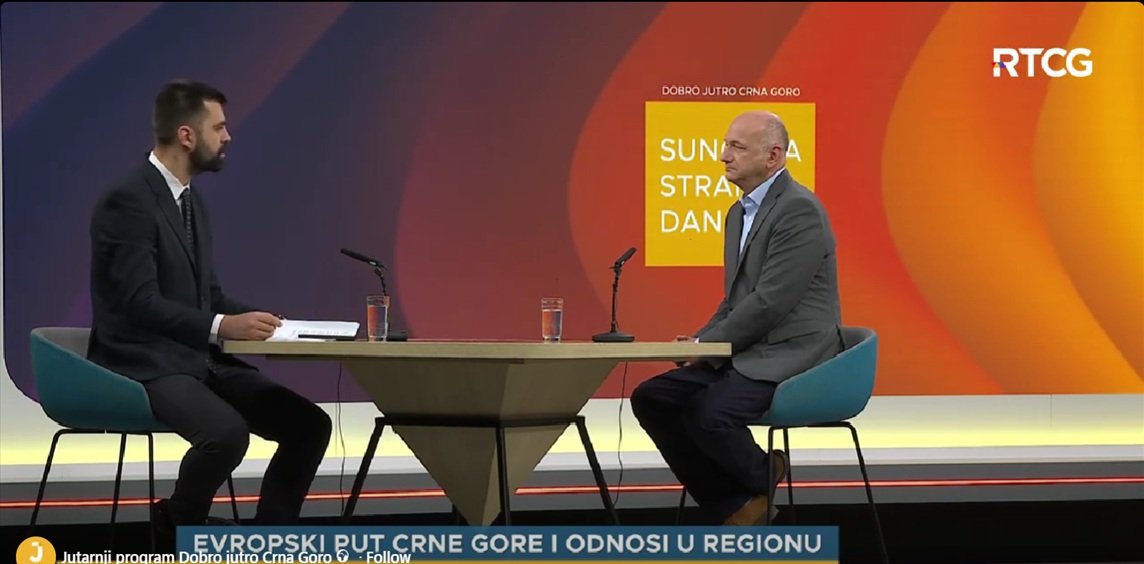
In an interview with RTCG, political scientist Dejan Jović reflected on Montenegro’s accession process, regional relations, and the changing political logic of EU enlargement. His analysis suggests that while Montenegro is closer to membership than any other Western Balkan candidate, the greatest obstacles may no longer lie in meeting the EU criteria, but in managing increasingly politicised bilateral relations among member states and candidate countries.
From Regional Integration to Individual Accession
Jović recalled that the EU’s original approach towards the Western Balkans envisioned the region progressing collectively toward membership while simultaneously addressing the legacy of the conflicts of the 1990s.
He noted that he had advocated such an approach as early as 2002, believing that countries would benefit from cooperating rather than competing during the accession process.
Today, however, the political landscape has changed considerably.
It is difficult to speak about joint accession today because the countries of the region have become very different. Every country that comes close to EU membership deserves support, and Montenegro currently appears to be leading the process.
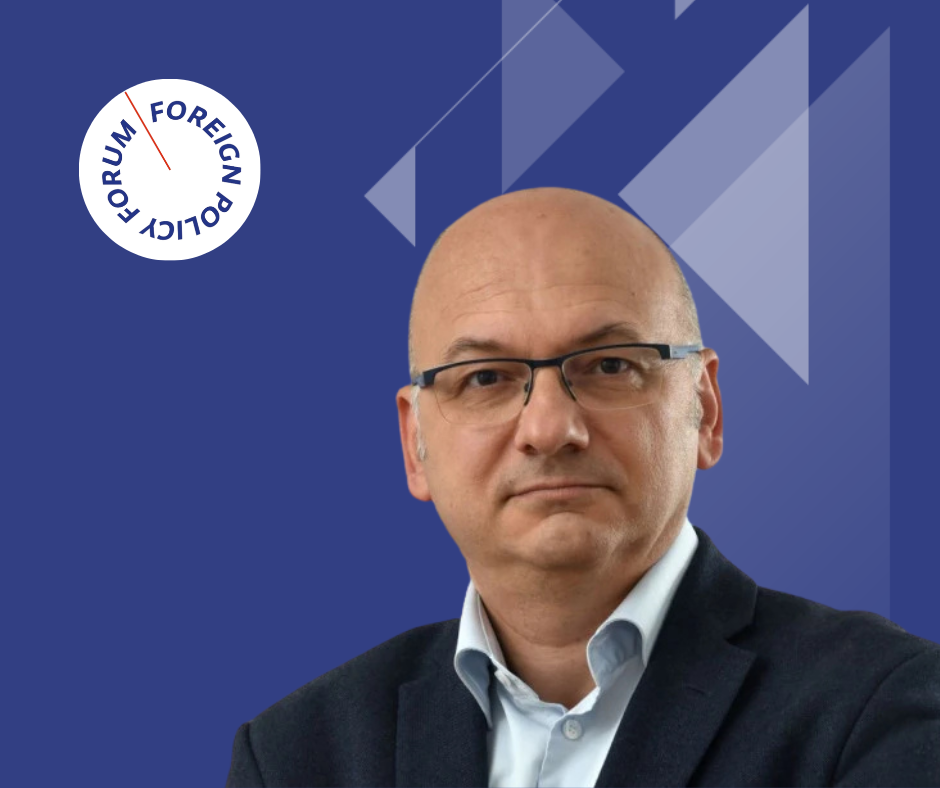
DEJAN JOVIĆ, FOREIGN POLICY FORUM PRESIDENT OF THE BOARD
According to Jović, the transition from a regional to an individual accession model has fundamentally altered political incentives throughout the Western Balkans.
Enlargement Increasingly Depends on Bilateral Politics
One of the central themes of the discussion concerned the growing influence that existing EU member states can exercise over candidate countries.
Jović observed that almost every enlargement round has demonstrated how new member states tend to use their veto leverage to pursue unresolved bilateral issues with aspiring members. He cited Greece’s long-standing dispute with North Macedonia and Slovenia’s disagreements with Croatia as notable precedents.
He argues that relations between Croatia and Montenegro increasingly reflect this broader pattern.
If Croatia were to block Montenegro’s accession, it would be harmful for both the European Union and the region, even if it might produce some short-term political benefits for Croatia. What benefits one state is not necessarily beneficial for the European project as a whole.
DEJAN JOVIĆ, FOREIGN POLICY FORUM PRESIDENT OF THE BOARD
In his assessment, while every state naturally seeks to maximise its political influence, enlargement policy should remain anchored in the EU acquis rather than becoming a vehicle for resolving historical or identity-based disputes.
Historical Narratives Should Not Define Enlargement Policy
A significant part of the discussion focused on Croatia’s requests towards Montenegro, including issues relating to the legacy of the 1990s wars and questions of historical accountability.
Jović argued that many of these issues fall outside the formal framework of the EU accession process.
Rather than reflecting technical compliance with EU law, they concern national identity, historical memory and differing interpretations of the 1990s wars – areas that are politically sensitive and difficult to resolve through enlargement negotiations alone.
He cautioned against any member state assuming the role of gatekeeper on behalf of the European Union.
According to Jović, while Croatia undoubtedly possesses the institutional capacity to slow Montenegro’s accession, many other EU member states appear reluctant to see enlargement transformed into an instrument for settling bilateral historical disputes.
He further observed that despite numerous expressions of regret exchanged by political leaders in Croatia, Montenegro and Serbia over the past two decades, wartime issues have once again returned to the centre of bilateral relations, risking renewed political polarisation rather than reconciliation.
Domestic Consensus Remains Montenegro’s Greatest Challenge
Drawing on Croatia’s own accession experience, Jović recalled that both the government and the opposition ultimately treated EU membership as a shared national objective. While political competition continued, there was broad agreement that accession should not become a partisan issue and that all major political actors had a responsibility to contribute to Croatia’s European path.
He sees a different dynamic in Montenegro today. Although both the government and the opposition officially support EU membership, political competition has increasingly shifted towards claiming ownership of the accession process.
During previous election campaigns, the current opposition argued that a change of government would steer Montenegro away from the European Union and closer to Serbia and Russia. Since this prediction did not materialise and the current government has continued to pursue EU integration, parts of the opposition now face the political challenge of accepting that Montenegro’s accession could ultimately be achieved under a rival political leadership.
It is necessary to leave campaign narratives behind and recognise that EU membership is a strategic national interest rather than an issue of day-to-day political competition.
DEJAN JOVIĆ, FOREIGN POLICY FORUM PRESIDENT OF THE BOARD
Jović argues that accession should be viewed as a national achievement rather than a partisan victory. Recalling Croatia’s own experience, he notes that although the SDP government formally completed Croatia’s accession, the HDZ later presented itself as the principal architect of EU membership. In his view, this illustrates that governments change, but the strategic benefits of accession belong to the country as a whole.
Is Montenegro Ready for Membership?
Jović expressed confidence that Montenegro’s level of preparedness is broadly comparable to that of previous enlargement candidates at the moment of accession.
“No country is perfect. Montenegro is not Austria, but every member state has entered the European Union with its own specific characteristics.”
DEJAN JOVIĆ, FOREIGN POLICY FORUM PRESIDENT OF THE BOARD
Whether Montenegro succeeds in joining by 2028, however, will depend not only on domestic reforms but also on political developments within the European Union itself.
According to Jović, Croatia’s future approach could become an important variable, as could the willingness of other member states to prevent bilateral disputes from obstructing enlargement.
Policy Implications
Jović’s analysis highlights a broader dilemma facing the European Union’s enlargement policy.
While the EU formally evaluates candidate countries against common legal and political standards, the accession process has become increasingly vulnerable to bilateral political disputes introduced by individual member states.
For Montenegro, maintaining broad domestic political consensus in favour of European integration remains essential. At the same time, constructive engagement with Croatia will be necessary to prevent unresolved historical questions from overshadowing strategic interests shared by both countries.
More broadly, Jović’s reflections raise an important question for the European Union itself: whether enlargement will continue to function as a geopolitical instrument for strengthening European unity, or increasingly become subject to the domestic political priorities of individual member states.
This article is an analytical synthesis of the views expressed by political scientist Dejan Jović during an interview with RTCG, hosted by Nikola Đurović. It is not a verbatim translation of the interview but a policy-oriented summary and interpretation prepared for an international audience.