The International Environment Is Changing Faster Than European Policy
As Russia’s war against Ukraine continues, instability persists across the Middle East, and strategic competition between the United States and China reshapes global politics, Europe faces growing pressure to redefine its place within an increasingly complex international system.
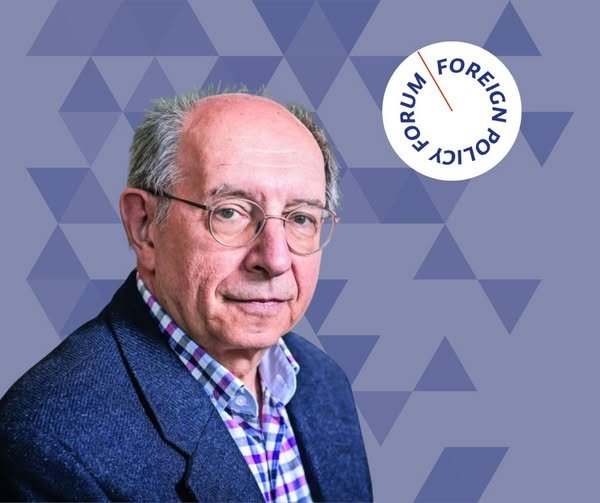
In a recent interview with the BUKA Podcast, member of th FPF’s Board Božo Kovačević argues that many assumptions underpinning European foreign policy no longer reflect geopolitical reality. His observations extend beyond the war in Ukraine, addressing the future of European diplomacy, the Western Balkans, and Bosnia and Herzegovina’s position in a changing international order.
While some of his assessments may invite debate, they offer a perspective on several strategic questions currently confronting European policymakers.
The main lesson taken from the fact that the international community which created the Dayton Agreement is no longer the same as it is today is that the political actors within Bosnia and Herzegovina must reach agreements among themselves in such a way that none of them becomes merely an executor of the interests of any external power.
BOŽO KOVAČEVIĆ, FOREIGN POLICY FORUM MEMBER OF THE BOARD
1. Multipolarity Is No Longer a Future Scenario
Kovačević rejects the notion that the world is becoming multipolar.
“The world is already multipolar.”
In his assessment, the United States and China remain the two dominant global powers, while Russia seeks to recover geopolitical influence that cannot realistically replicate the position once held by the Soviet Union.
Against this backdrop, he argues that the European Union has yet to establish itself as an autonomous strategic actor despite years of discussion surrounding concepts such as strategic autonomy and the Strategic Compass.
2. European Security Requires Both Military Strength and Diplomacy
One of Kovačević’s principal arguments concerns Europe’s relationship with Russia.
While acknowledging the necessity of strengthening European defence capabilities, he warns against allowing military policy to replace diplomatic engagement.
“If you refuse to negotiate… only war remains.”
According to Kovačević, sustainable European security cannot be achieved through military deterrence alone. Diplomatic communication, even between strategic adversaries, remains an indispensable component of long-term stability.
3. Ukraine Has Changed the Strategic Equation
Kovačević argues that Ukraine’s demonstrated ability to strike military targets deep inside Russian territory has altered the dynamics of the conflict.
He believes these developments have strengthened Kyiv’s political position while challenging previous assumptions regarding Russia’s military invulnerability.
Although he suggests that these changes could eventually influence future negotiations over occupied territories, he also stresses that no lasting settlement can emerge without renewed diplomatic efforts.
4. The Western Balkans Remain Europe’s Unfinished Project
Turning to Southeast Europe, Kovačević characterises the Western Balkans as the principal unresolved consequence of the post-Cold War settlement.
“The Balkans remained the unfinished business.”
In his view, the European Union’s effective suspension of enlargement after Croatia joined in 2013 interrupted the broader project of democratic consolidation across the region.
He argues that this strategic pause created opportunities for entrenched political elites to consolidate their positions while maintaining only rhetorical commitments to European integration.
5. Why EU Enlargement Still Matters
Despite his criticism of certain aspects of EU foreign policy, Kovačević maintains that accession remains the most credible long-term framework for Bosnia and Herzegovina’s development.
Drawing upon Croatia’s experience, he points to economic convergence, access to cohesion and development funds, labour mobility and participation in the European Single Market as tangible benefits of membership.
In his assessment, enlargement remains not only an economic instrument but also an important geopolitical stabilisation policy.
6. Bosnia and Herzegovina Must Assume Greater Political Ownership
Perhaps Kovačević’s most significant observation concerns Bosnia and Herzegovina itself.
He argues that the geopolitical circumstances under which the Dayton Peace Agreement was negotiated no longer exist. The international community that designed and guaranteed the agreement has evolved considerably, while divisions within the broader Western alliance have become increasingly visible.
Consequently, he contends that domestic political actors can no longer rely on external mediation as the primary mechanism for resolving constitutional and political disputes.
Instead, Bosnia and Herzegovina’s future stability will increasingly depend upon the willingness of its own political leaders to negotiate sustainable internal compromises.
Implications for Bosnia and the Western Balkans
Whether or not one agrees with all of Kovačević’s conclusions, his analysis reflects broader debates currently taking place across European foreign policy circles.
His central argument is that Europe is entering a geopolitical era in which diplomacy, enlargement policy and regional ownership will become increasingly important. For Bosnia and Herzegovina, this implies that long-term stability cannot depend indefinitely on external actors alone. For the European Union, it raises a broader strategic question: whether the Western Balkans will once again become an integral part of the European project or continue to occupy a geopolitical grey zone at the Union’s southeastern frontier.
This article provides an analytical summary of the views expressed by former Croatian diplomat and foreign policy analyst Božo Kovačević during an interview with the BUKA Podcast. It is not a verbatim translation of the original interview. The original interview was published by BUKA. Readers may consult the original publication for the complete interview and full context. The views presented are those of the interviewee.