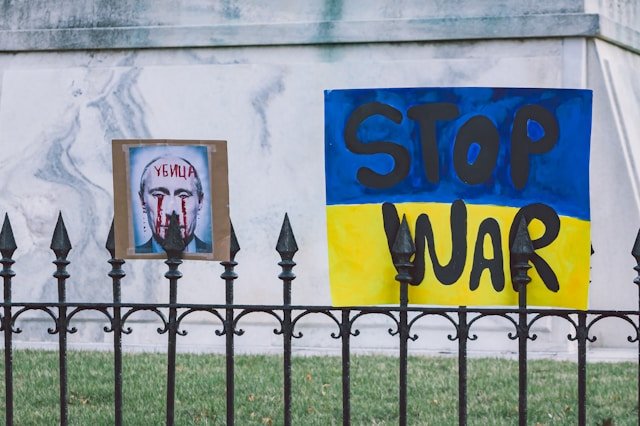
Due to the obvious failure of his attempt to occupy all of Ukraine, Russian President Putin had to change the declared goals of his conquest. He did this by declaring the Ukrainian regions of Donetsk, Luhansk, Zaporizhzhia, and Kherson as parts of Russia in 2022, in addition to the previously occupied Crimea. Since none of these regions are fully under the control of the Russian army, the new goal of the war is to liberate those parts of these Ukrainian territories that are under Ukraine’s control. With such hocus-pocus, he tried to present a war of conquest as a defensive one. However, if a country that likes to consider itself a military superpower fails to establish Russian authority over allegedly Russian territory even after four years of war, then it is justified to doubt whether it is indeed a military superpower. These doubts are increasingly justified by the fact that Ukraine manages to hit targets deep inside internationally recognized Russian territory with long-range missiles and has carried out several spectacular sabotage actions. All this leads to the conclusion that Russia has suffered a defeat.
Such a conclusion is supported by the fact that sanctions are being implemented against it, despite being a permanent member of the UN Security Council, and that the International Criminal Court has issued an arrest warrant for President Putin. Because of this warrant, he cannot participate in BRICS summits outside of Russia, nor can he attend sessions of the UN General Assembly. Regardless of the fact that it is almost unbelievable that he could actually be arrested, this warrant burdens Putin as a kind of loser’s stigma. One of the goals of his foreign policy was to acquire the kind of importance for Russia in today’s system of international relations that the USSR had during the Cold War. With the war against Ukraine, he wanted to achieve being an equal participant in discussions about the global and European security architecture, that is, a participant in meetings where the fate of the world is shaped and where great powers decide on other countries, but he has brought himself into a situation where others are deciding the fate of Russia.
By positioning America exclusively as a mediator, rather than as an ally negotiating with Russia from a position of strength on behalf of the EU, NATO, and Ukraine, America has offered Putin a lifeline… Thus, an absurd situation has been created where Europe, completely ignoring the possibility of an outbreak of a nuclear war, insists on the military defeat of Russia, which it is incapable of achieving itself without America, which refuses to participate in it.
BOŽO KOVAČEVIĆ, MEMBER OF THE FORUM’S BOARD
Aware that admitting defeat would mean losing power for him, Putin resorted to an extreme, almost desperate move. Through posts by the Deputy Chairman of the National Security Council, Dmitry Medvedev, he has repeatedly threatened the possibility of using nuclear weapons against those countries that help Ukraine. The new nuclear doctrine, adopted in 2024, stipulates that Russia will use nuclear weapons against those states that are nuclear powers themselves, and which supply non-nuclear weapons to Ukraine with which it threatens the national security and territorial integrity of Russia. This was an open threat to the United States, the United Kingdom, and France. At the same time, this was a warning to all European NATO members on whose territory American nuclear weapons are deployed. It seems that increasing the chances of an outbreak of a nuclear war has mostly influenced the positioning of the United States towards Ukraine. The administration of President Biden had already ruled out the possibility of delivering such weapons with which Ukraine could actually threaten Moscow and clearly stated that admitting Ukraine into NATO is out of the question.
Of course, the key event on which developments in the system of international relations depend is Donald Trump’s victory in the 2024 presidential election. During the campaign, he announced that, after taking power, he would stop the war in Ukraine within a few days, which wouldn’t have even happened if he had been the US president in 2022. Likewise, he claims, Russia would not have occupied Crimea in 2014 if he, and not President Obama, had been in the White House then. He did not explain how he would have prevented the Russians from executing what they executed in 2014 and 2022. He also failed in his attempt to quickly engineer the signing of a peace agreement. However, it is an undeniable fact that he initiated diplomatic negotiations on a possible peace agreement. Introducing herself as the new Director of National Intelligence at the Munich Security Conference in February 2025, Tulsi Gabbard said that President Trump is focused on “ending the killing and cruelty in the war between Russia and Ukraine and on preventing a nuclear war.”
Trump’s willingness to talk to Putin on the phone and to meet with him meant rejecting Biden’s uncompromising approach based on the expectation that the entire democratic world would align behind the US and the collective West. This unsuccessful attempt at the complete isolation of Russia led to a certain self-isolation of the West in relation to the rest of the world because some countries, including India as the most populous democratic country on whose cooperation Biden counted, took advantage of the opportunity to buy Russian energy sources on favorable terms. To show that he is serious and that he is not joking around, Trump—after Putin ignored his initial and highly generous proposal for Russia—introduced new sanctions against Russia and threatened to introduce secondary sanctions against those states that continue to buy Russian energy sources. In doing so, he openly criticized the EU for inconsistency in implementing principled decisions on terminating all cooperation with Russia.
Trump started from the assumption that the problem that needs to be solved is Ukraine, not Russia. If he were to define Russia as the problem, it would be more difficult to reach a solution due to insufficient instruments of direct pressure on Putin and due to the growing threat of a nuclear war. On the other hand, due to Ukraine’s obvious dependence on American aid (even if American weapons arrive in Ukraine by Washington selling them to European NATO members who then donate them to Ukraine), his levers of influence on Zelensky are significantly stronger. Therefore, his negotiations with Putin came down to whether the American or Russian variant of Ukraine’s capitulation would be applied.
Ukraine and the European NATO members are trying in every way to thwart Trump’s peace initiative. Europe’s insistence on a just peace implies the military defeat of Russia. Such an outcome is not possible without direct American involvement in that war. By emphasizing the position that this is not an American war, Trump ruled out that possibility. By positioning America exclusively as a mediator, rather than as an ally negotiating with Russia from a position of strength on behalf of the EU, NATO, and Ukraine, America has offered Putin a lifeline. The unreasonable insistence of the Coalition of the Willing member states that Trump should continue implementing Biden’s policy towards Russia has led to a further convergence of Trump’s and Putin’s positions because both see Europe and Ukraine as an obstacle to reaching an agreement. Thus, an absurd situation has been created where Europe, completely ignoring the possibility of an outbreak of a nuclear war, insists on the military defeat of Russia, which it is incapable of achieving itself without America, which refuses to participate in it. European leaders act as if they want the war in Ukraine to be the cause of a Third World War that will be fought on European soil.
The depth of the rift between America and its former European allies is also evidenced by the highly unusual situation in which intelligence agency chiefs appear in the role of political spokespersons for their governments. The head of the British intelligence service MI6, Blaise Metreweli, in her speech delivered on December 15, singled out Russia as the source of a direct threat to Europe, NATO, and the United Kingdom. As if she were the Prime Minister of the United Kingdom, and not just the head of an intelligence service based on whose data and assessments the government should make decisions, she stated:
“But Putin should not doubt, our support (for Ukraine) is permanent. The pressure we exert on behalf of Ukraine will be sustained. Because it is fundamental not only for European sovereignty and security, but for global stability.”
Emphasizing that the United Kingdom is exposed to numerous Russian provocations that are one step away from open conflict, she called the activities of her service, as well as other parts of the security apparatus, a defense against the Russian information war. Striving to prevent the effects of chaos that Russia persistently spreads with the aim of destabilizing rival countries, MI6 will, Metreweli announces, continue with its operations until “Putin is forced to change his calculus.” In doing so, of course, she did not list everything her service is undertaking against Russia, nor did she mention the possibility of a nuclear war breaking out.
She was answered by the Director of National Intelligence of the United States, Tulsi Gabbard. In her speech delivered on December 20 in Phoenix, Arizona, she primarily accused the warmongering opponents of Trump’s policy from the American deep state, entrenched structures primarily in the intelligence services, who unauthorizedly publish documents attempting to sabotage his peace efforts. She continued with accusations against NATO and the EU:
“They spread fear and hysteria as a way to justify prolonging the war, and their attempts to undermine President Trump’s peace efforts in this case they undertake in order to drag the US military into a direct conflict with Russia, which is ultimately what the EU and NATO want. We cannot allow that to happen. We must clearly see what is happening before our eyes and remain united in this cause for peace.”
Moreover, Trump’s National Security Strategy, published in November, does not single out Russia as a threat at all. Furthermore, it speaks of the changes that European countries must implement in the area of foreign and domestic policy in order to be reliable American allies. As if America cares more about the well-being and security of Europeans than their own governments, it is written there:
“It is the vital interest of the United States to negotiate an effective cessation of hostilities in Ukraine in order to stabilize European economies, prevent inadvertent escalation or expansion of the war, and to re-establish strategic stability with Russia, as well as to enable the reconstruction of Ukraine after the cessation of hostilities, in order to enable its survival as a state.”
So, we clearly see that America wants to normalize relations with Russia, accommodating it at the expense of Ukraine, while European NATO members insist on the growing danger of a future Russian attack on a European NATO member in the event that Russian aggression against Ukraine goes unpunished. It seems that even the meeting between Trump and Zelensky, held on December 28, did not show that there had been a significant change in this regard. It is logical in this situation to ask the question of who is right, America or the EU? Is the possibility of a Russian attack on a European NATO member likely? It is reasonable to assume that Tulsi Gabbard and Blaise Metreweli have reliable data based on which an answer to this question can be reached. However, their answers, as we have seen, are different. Therefore, I will try here to outline the reasons that could guide Putin in making a decision on whether or not to attack a European NATO member.
Possible reasons for an attack
- It is obvious that America does not intend to apply the provision of Article 5 of the NATO Charter. Since the European NATO members do not sufficiently respect the authority and importance of the US, especially the leadership of the current President Trump, America refuses to be the unconditional guarantor of their security in the event of an attack on one of them.
- For America, strategic stability in relations with Russia as a nuclear power is more important than the loyalty of any NATO member that prioritizes its animosity towards Russia over adapting to American interests.
- European NATO members are not and in the foreseeable future will not be ready for independent defense against a Russian attack, so Russia should take advantage of this circumstance and take appropriate steps in a timely manner.
- Russia has failed to achieve by diplomatic means the importance in the system of international relations that the USSR had, but it has achieved it through its military intervention against Ukraine. Therefore, if the use of force paid off once, it will pay off a second time. Moreover, the continuation of the war delays facing the catastrophic economic and social consequences of the war against Ukraine.
- If President Trump insists on restoring the American sphere of influence in accordance with the Monroe Doctrine, Russia can insist on restoring its sphere of influence provided that it does not collide with American interests. Since Europe is no longer an area of primary American interest, there is no possibility that the two superpowers will directly clash over some Russian territorial acquisition in Europe.
Possible reasons against an attack
- Although the majority of the Russian public is ready to accept a peace plan and although such a plan can be presented as a success, it is clear even to Putin that he has actually experienced a failure because he failed to achieve his goals by military means, and this welcome peace was achieved through the mediation of America. Despite the declarative normalization of relations with America, it is clear that the two countries are not equal and that Putin is dependent on Trump’s goodwill. Therefore, it would not be wise to test the limits of Trump’s patience because, even if he did not activate Article 5 of the NATO Charter, he could decide not only not to lift existing sanctions against Russia, but also to impose new ones.
- If Russia were to launch an aggression against another country, it is possible that Ukraine would seize the opportunity and try to liberate by military force the areas it lost through negotiations. If it failed to win by waging a war on only one front, what would be the prospects for victory in a war on two or more fronts if other members also joined in the defense of the attacked NATO member?
- Failures on the Ukrainian battlefield led to Prigozhin’s mutiny in 2023. By pure luck, a coup d’état and the fall of Putin’s regime were avoided. If a potential attack on a European NATO member also goes wrong due to the already proverbial corruption and incompetence in the Russian army, perhaps something similar to Prigozhin’s mutiny, but this time better organized, could happen again and lead to a successful coup d’état.
- The remediation of the consequences of the war requires such vast financial resources that financing a new war is impossible. It will no longer be possible to pay foreign mercenaries, and Russians will evade military service to an even greater extent than before if a new war occurs.
- It is better to work on improving the living standard of the citizens who, if the past war ceases to be mentioned excessively and if a new one is not started, will forget the hardships of war and be grateful to the government for ensuring peace and announcing a greater degree of prosperity that will follow, especially after the announced unfreezing of Russian funds abroad and the announced lifting of sanctions.
Readers, of course, understand that all these reasons are pure speculation derived from publicly available data. Finally, I want to emphasize that anyone who can in any way influence political decision-making should engage in convincing politicians that no reason for starting a new war, no matter how plausible it may seem, is acceptable. Putin’s decision to launch the invasion of Ukraine was irrational, driven more by personal frustration over failures in foreign policy than by reasons related to the well-being of Russian citizens. The consequences of that decision have been catastrophic. It is necessary to rationally assess the possibilities of achieving a peace in Ukraine that will not produce new causes for war. And it is necessary for all parties to conduct policies in the future that will reduce the likelihood of anyone thinking that it is more profitable to achieve foreign policy goals through war than through diplomacy.